
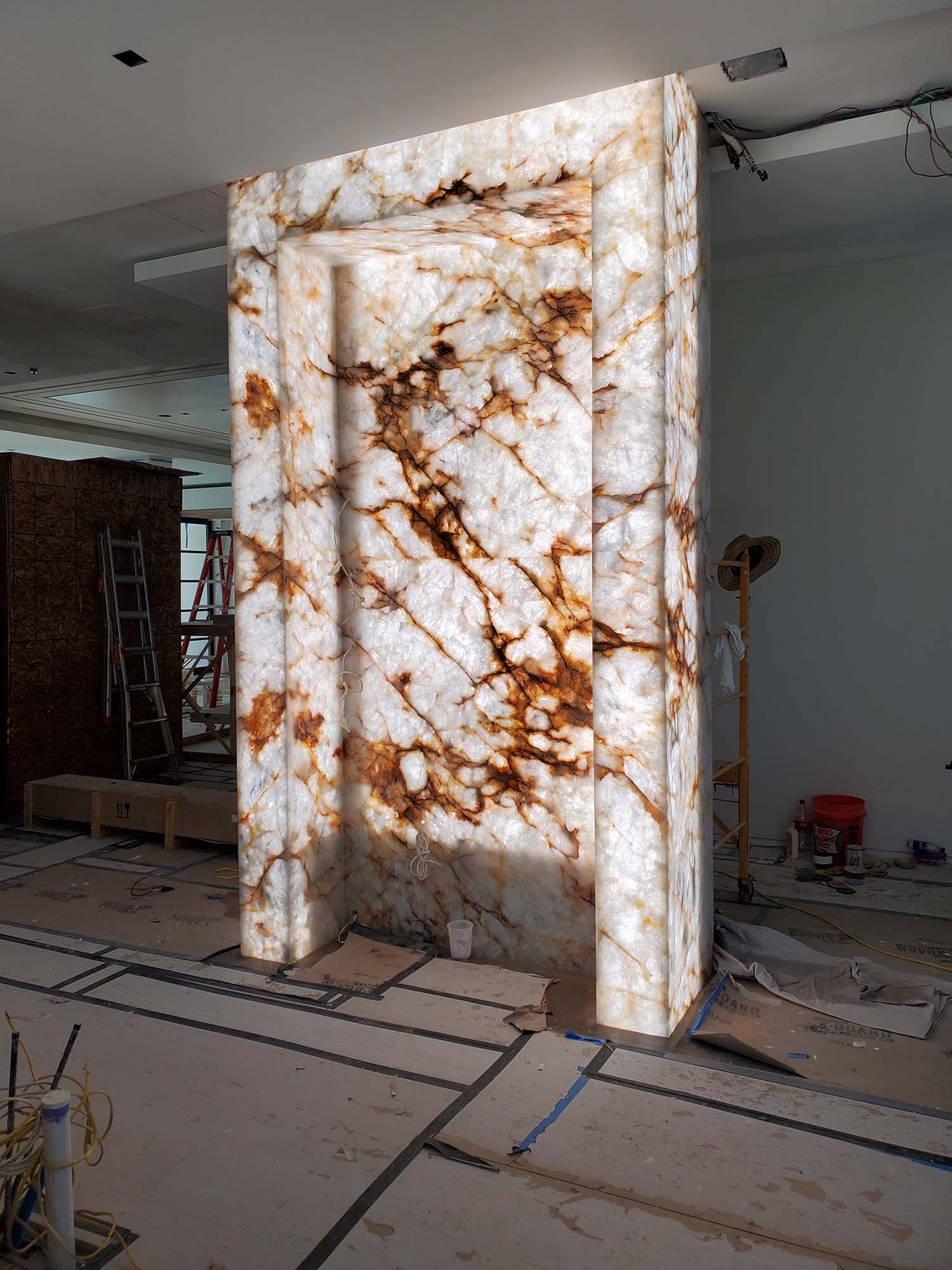
Quartzite Slab Lighting Guide for Statement Spaces
A dramatic quartzite slab can look impressive in a showroom and disappear once it becomes part of a finished room. The difference is often lighting. This quartzite slab lighting guide explains what it takes to turn a beautiful natural surface into the visual center of a kitchen, bar, bath, reception area, or entertaining space – without creating hot spots, visible hardware, or expensive surprises during installation.
Backlighting quartzite is not a plug-and-play upgrade. Every slab has its own mineral makeup, thickness, veining, and degree of translucency. The strongest results come from evaluating the actual stone, designing the light source around it, and coordinating the details before fabrication begins.
Start With the Actual Slab, Not a Sample
Quartzite has a reputation for durability and high-end beauty, but it is not uniformly translucent. Some selections have luminous white, cream, gray, gold, or green areas that allow light to travel through the material. Others are dense and opaque, with only a few veins or crystalline pockets that react to illumination.
A small sample may suggest a slab will glow beautifully, while the full piece reveals dark mineral areas that block nearly all light. That does not mean the material is wrong for a statement installation. It means the design should follow the stone instead of making a promise the stone cannot keep.
Before committing to a backlit quartzite island, vanity, wall, or bar front, test the full slab with a controlled light source. View it from the planned finished side and look for the areas that brighten, the veins that become more pronounced, and the sections that remain solid. This simple step gives the designer, fabricator, and lighting specialist a shared picture of what is possible.
Choose the Right Application for Quartzite Lighting
The best application depends on where the slab has translucency and how people will experience the space. A large kitchen island can become the room’s showpiece when the stone has enough movement and light transmission across the face. A bar front can create a warm, resort-like mood for evening entertaining. A powder room vanity can add a refined glow without requiring a huge illuminated surface.
Quartzite can also work beautifully as a feature wall, fireplace surround, reception desk face, conference table accent, or retail display. In commercial spaces, the goal is often brand presence and atmosphere. At home, the goal may be creating a memorable gathering space that looks equally polished during the day and after dark.
There is a trade-off. Broad, evenly glowing surfaces demand more planning and a more precise lighting system than a smaller accent panel. If the slab is only partially translucent, consider placing the most reactive portion where it will have the most impact rather than lighting an entire surface simply because it can be done.
Islands and bar fronts
A backlit island or bar front is viewed from several angles and often at close range. Even distribution is essential because guests will notice bright dots, dark bands, and visible shadows right away. The stone’s natural pattern should stay in control. The light is there to reveal depth, not flatten it.
Vanities and vertical features
Vertical quartzite panels can be especially effective because viewers see them head-on. They also allow the lighting assembly and service access to be planned behind the finished face. In a vanity setting, the color of the light matters more than many homeowners expect. A warm, flattering glow can feel luxurious; a light that is too cool can make a beautiful bathroom feel clinical.
Use a Lightpad System for Even Illumination
A standard strip-light approach is rarely the right answer behind a translucent stone surface. Individual LEDs can print through the slab as dots. Spacing that looks acceptable during installation can become distracting when the room lights are low and the quartzite is fully illuminated.
A purpose-built LED Lightpad system distributes light across the surface to create a more even field of illumination. This is especially valuable with quartzite because natural density changes already create variation. The lighting should minimize avoidable variation, not add more of it.
The depth of the cavity behind the stone, the slab thickness, the light output, and the translucency of the material all affect the final result. Thin, highly translucent material may need a different approach than a thicker slab with selective glowing veins. A qualified specialist will design for the exact conditions rather than relying on a one-size-fits-all fixture layout.
Color temperature should also be chosen for the stone and the room around it. Warm white lighting can enrich gold, beige, amber, and cream tones. Neutral white often suits clean whites and soft grays. Cooler lighting can work in some modern settings, but it may pull quartzite away from the inviting, organic quality that makes it special. Dimming is worth considering for almost every residential project, since a bright daytime statement may call for a softer glow when guests arrive.
Plan the Stone, Structure, and Lighting Together
The lighting conversation should happen before final fabrication, not after the quartzite has been cut and installed. A successful project requires room for the lighting assembly, a stable mounting surface, concealed wiring, proper ventilation where needed, and a practical path for future service.
The stone fabricator needs clear information about panel dimensions, edge details, seams, support requirements, and any openings for outlets or plumbing. The contractor and electrician need to know where power will originate and how controls will be handled. The lighting installer needs access to the finished cavity while protecting the stone and surrounding millwork.
This coordination is where custom projects either stay smooth or become costly. Trying to add backlighting after cabinetry, stone, and electrical work are complete can limit the design and create unnecessary rework. Bringing the right trades together early protects both the visual concept and the construction schedule.
For most projects, the lighting equipment should remain accessible without removing the quartzite. That may mean planning a removable panel, a service opening, or access through adjacent cabinetry. It is not the glamorous part of the design, but it is one of the details that separates a finished showpiece from a future headache.
Avoid the Most Common Quartzite Lighting Mistakes
The first mistake is assuming all quartzite will illuminate like onyx. Onyx is often selected specifically for its translucency. Quartzite can create a remarkable effect, but it is usually more selective and nuanced. Testing the slab lets you set the right expectations and choose the best area to feature.
The second is selecting light output based only on brightness. More light is not always better. Excessive output can wash out subtle veins, expose installation inconsistencies, and overpower the rest of the room. A dimmable system gives you flexibility, but the base design still needs to be balanced.
The third is treating the illuminated stone as a separate decorative item. Its light should work with the room’s finishes, ceiling fixtures, wall colors, and overall mood. A warm coastal bar, a sleek Miami condo kitchen, and a formal reception desk may all use quartzite, but they should not necessarily use the same color temperature or intensity.
Finally, do not overlook the finish quality around the slab. Clean edges, concealed components, careful seam placement, and accurate alignment matter as much as the glow itself. Premium stone deserves an installation that looks intentional from every viewing angle.
What to Ask Before You Approve the Design
Ask to see the actual slab tested with lighting, not just a digital rendering. Confirm which areas will glow most strongly and where natural shadows should be expected. Discuss whether the illumination will be visible from the room’s main sightlines, whether it will be dimmable, and how the system can be serviced later.
You should also ask who is coordinating with the fabricator and electrician. Custom illuminated stone involves several moving parts, and clear ownership prevents details from falling between trades. LightPads Unlimited works directly with project teams to coordinate the lighting design, stone requirements, installation, and final presentation – because the wow factor depends on more than turning on a switch.
Let the Stone Lead the Design
The most compelling quartzite installations do not try to make every inch glow the same way. They celebrate the unexpected crystalline vein, the soft halo around a mineral formation, and the depth that only natural stone can provide. With the right slab, a carefully designed LED system, and early coordination, quartzite can turn an already premium surface into the feature everyone notices first – and remembers long after they leave.
0 comments