
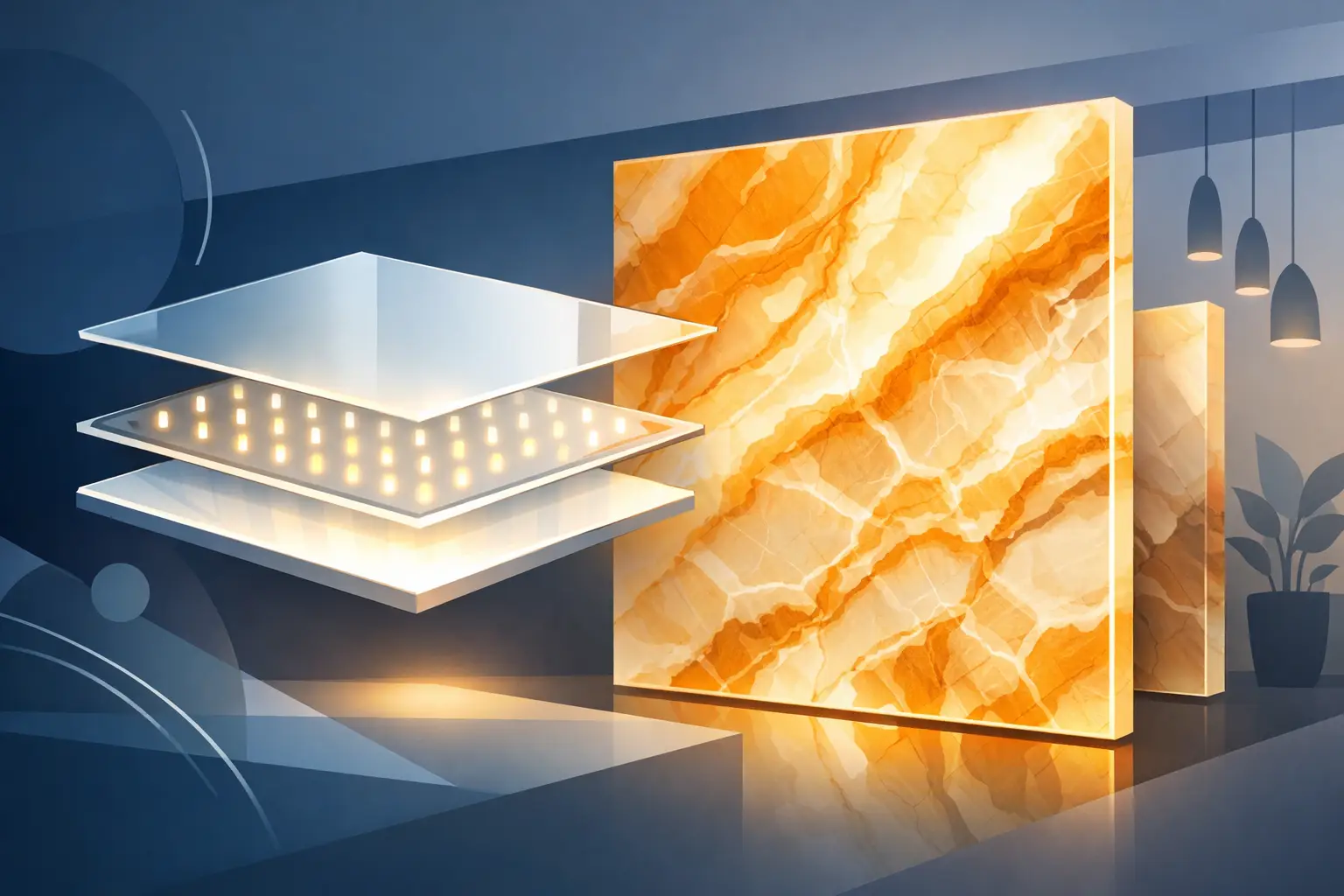
LED Panels for Onyx Slabs That Look Exceptional
An onyx slab can look beautiful in a showroom and still disappear once it becomes part of a finished kitchen, bar, or vanity. The right LED panels for onyx slabs change that completely. They bring forward the stone’s natural veining, warmth, movement, and depth, turning a premium surface into the feature everyone notices when they walk into the room.
That result is not simply a matter of putting a light behind a slab. Onyx is a natural material with changing density, color, and translucency from one area to the next. A polished backlit installation needs thoughtful lighting design, correct fabrication details, and coordination between the lighting specialist, designer, contractor, and stone fabricator. When those pieces are planned early, your illuminated stone can add the WOW factor without surprise shadows, hot spots, or access problems later.
Why LED Panels for Onyx Slabs Need a Custom Plan
Onyx allows light to travel through the material, but it does not transmit that light evenly everywhere. A creamy white section may glow brightly, while a dramatic amber vein or darker mineral area naturally blocks more illumination. That is part of onyx’s appeal. The goal is not to erase its character, but to light it evenly enough that the movement in the stone feels intentional and luxurious.
Standard cabinet lighting or a few strip lights placed behind a slab often produce visible lines of light, bright points, and dark areas. These problems become especially obvious at night, when the backlit stone is meant to be the star. A properly designed LED light panel spreads light across a broad surface, helping the onyx glow from behind rather than look like it has been lit in a few isolated spots.
The exact approach depends on the slab. A lightly colored, highly translucent onyx can require a different panel output than a thicker slab with rich rust, brown, green, or gold sections. A large kitchen island also needs a different design than a narrow bathroom backsplash or a small illuminated niche. There is no one-size-fits-all panel that guarantees a beautiful result across every type of stone.
Start With the Stone, Not the Fixture
The best lighting decisions begin when the slab is selected. Before fabrication, examine the onyx under backlighting whenever possible. What looks dramatic from the front under showroom lights may reveal opaque areas, fractures, resin repairs, or unexpected color shifts when light is placed behind it.
This is also the time to decide which face of the slab will be the visible focal point. Bookmatched onyx can create a breathtaking symmetrical pattern for a bar front, reception desk, feature wall, or vanity. A single large slab may have one especially vivid area that deserves to be centered on an island or behind a bar. Lighting should support that composition, not be added after the layout is already locked in.
Thickness matters as well. Thinner stone generally lets more light through, but durability, application, and fabrication requirements still have to lead the decision. In many installations, the fabricator may recommend backing, laminating, or otherwise reinforcing the material. The LED system is there to illuminate the stone. It should never be expected to carry its weight or compensate for an inadequate support structure.
For clients building a statement kitchen or entertainment space, this early coordination prevents the most frustrating outcome: choosing a spectacular slab, cutting it beautifully, then finding out the wall, cabinet, or bar cavity cannot accommodate the lighting system correctly.
Plan the Depth Behind the Slab
A light panel needs a properly prepared cavity behind the onyx. The available depth affects panel selection, wiring routes, ventilation needs, mounting details, and service access. A shallow backsplash may call for a different strategy than a freestanding island front or a reception desk with a deeper framework.
The supporting surface must be flat, stable, and designed to keep the stone properly supported. Even illumination depends on consistent spacing between the panel and the slab. If the substrate bows, if the panel is mounted unevenly, or if construction materials intrude behind the stone, the final glow can look inconsistent.
Access is another detail worth protecting. LED systems are long-lasting, but power supplies, controls, and connections should be located where they can be reached if service is ever needed. Hiding every component permanently behind finished stone may look tidy on installation day, but it can make a simple future adjustment unnecessarily expensive.
Choosing Brightness and Color Temperature
Brightness should be selected for the room, the stone, and the desired mood. A bright white onyx wall in a commercial lobby may need strong, clear illumination so it holds its presence during daytime hours. A residential bar or poolside feature may look better with a warmer, lower-level glow that feels inviting after sunset.
Color temperature has a major effect on the way onyx reads. Warm white lighting often enriches honey, cream, tan, and gold tones. Neutral white can give a cleaner look to white, gray, and cooler stones. A color-changing system can create a dramatic party atmosphere in the right setting, but it is not the best answer for every project. If the goal is to showcase expensive natural onyx every day, a carefully chosen white light usually presents the material more elegantly than constantly changing color effects.
Dimming is often the detail that makes a backlit installation feel finished. At full brightness, the stone can make a bold visual statement for entertaining, retail display, or a busy restaurant setting. Dimmed down, it becomes warm ambient lighting for a quiet evening at home. The controls should be selected and tested as part of the lighting plan, not treated as an afterthought.
Fabrication and Installation Details That Protect the Finish
Onyx deserves careful handling from the moment it is fabricated through final installation. Its appearance may be delicate even when the slab has been reinforced, and the lighting assembly has to respect that. Openings for outlets, plumbing, seams, brackets, and supports need to be planned with the fabricator so they do not interrupt the visual effect or create noticeable shadows.
For an illuminated kitchen island, designers should consider what will sit in front of the glowing face. Deep toe kicks, heavy cabinetry, structural posts, and decorative trim can all change the visible area of the stone. On a vanity, sink placement and plumbing access must work with both the slab layout and the light panel arrangement. In a bar, the lighting should complement the countertop, shelving, and seating rather than compete with them.
Wet-area conditions require additional care. Bathrooms, outdoor kitchens, poolside bars, and other moisture-prone spaces need appropriately specified electrical components, safe wiring methods, and a design that accounts for the environment. A beautiful effect is never worth cutting corners on the electrical side of the work.
Most ready-to-install projects can be completed quickly, often in a day, but speed comes from preparation. A clean finished result depends on confirming dimensions, electrical locations, stone thickness, framing, controls, and access before the installation crew arrives.
Where Backlit Onyx Makes Its Biggest Impression
A backlit onyx kitchen island is one of the most powerful ways to make an entertaining space feel custom. During the day, the stone brings color and texture. At night, it becomes a warm architectural centerpiece that changes the entire feel of the room.
Vanities and powder rooms are another natural fit. A glowing onyx backsplash or vanity front can turn a smaller space into an unexpected design moment. In luxury homes, it is often these high-impact details that guests remember.
Commercial spaces have just as much to gain. An illuminated reception desk helps establish a premium first impression. Restaurant bar fronts, hospitality counters, retail displays, conference tables, and office feature walls can use onyx lighting to create atmosphere while reinforcing the quality of the space.
Work With a Team That Coordinates the Details
The most successful onyx projects are collaborative. Your lighting specialist should be ready to speak with the designer, contractor, cabinet team, electrician, and stone fabricator before the slab reaches the job site. That conversation protects the design, prevents unnecessary rework, and gives everyone a clear plan for where the light panels, drivers, controls, and access points belong.
LightPads Unlimited approaches every backlit stone project as both a design feature and a construction detail. From a free consultation through installation and post-installation support, the focus is on making the finished piece look exceptional while keeping the process clear, responsive, and professionally managed.
If you are choosing onyx for a new build, renovation, bar, vanity, or statement wall, bring the lighting conversation in early. The right LED panel design lets the stone do what you chose it to do in the first place: make the room impossible to forget.
0 comments